
After 12 years of Dive In, Aon and WTW inclusion leaders say AI is creating fresh questions around recruitment, bias and talent development
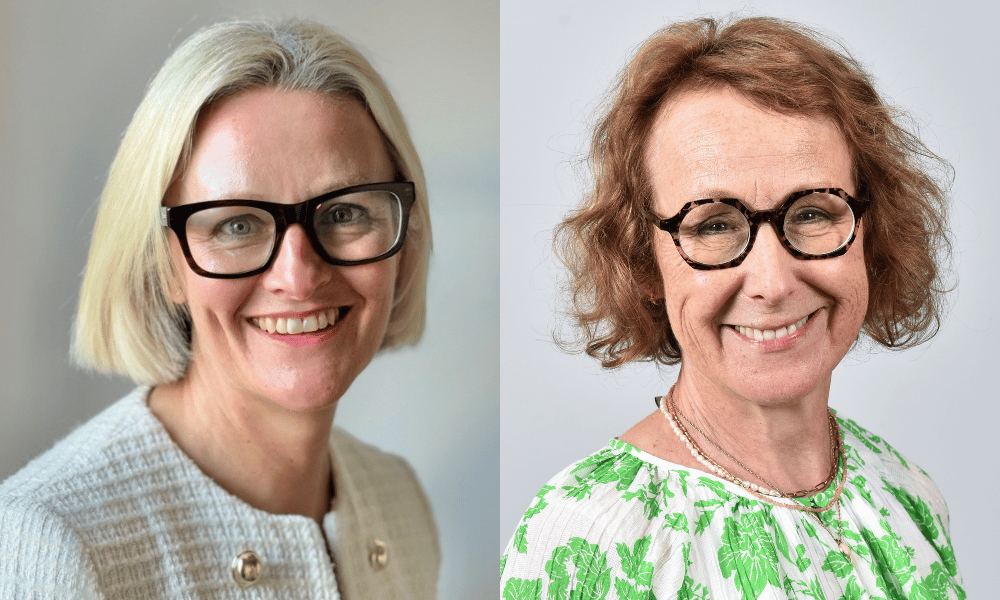
Dive In’s final festival arrives at a moment when the insurance industry’s inclusion debate is shifting again, with artificial intelligence beginning to reshape how firms recruit, develop and retain talent.
For major brokers including Aon and WTW, the challenge is increasingly less about persuading leaders that workplace culture matters and more about ensuring new technology does not undo progress made over the past decade.
Katherine Conway (pictured on the right), head of inclusion at Aon, and Jen Denby (pictured on the left), global head of inclusion & diversity at WTW, both long-time participants in Dive In, said the industry has changed substantially since the festival began 12 years ago. Conversations that once centred heavily on gender and the basic business case for diversity have widened to include mental health, fertility, menopause, domestic abuse, disability and neurodiversity.
“I think the way we’ve tackled the difficult topics is something that I’ve been really proud of, really opening conversations and opening mindsets to what you can talk about in the workplace and what’s important,” Conway said. “It’s completely different talking to people around this work and its importance than it was 12 years ago.”
Denby said culture is now “recognised as a business priority in its own right, not simply a people initiative that runs on the side.”
Insurance still has a talent perception problem
While both executives acknowledged progress, they said the shift in perspective on diversity and inclusion (DEI) also has direct implications for brokerages competing for talent. Insurance still faces a persistent perception problem among younger workers, even as graduate and apprenticeship programmes have expanded.
“Insurance doesn’t have the visibility with young people that other sectors do,” Denby said. “I’m still surprised when I hear people talk about their journeys and why they joined insurance. So many people stumble into insurance.”
Conway said the industry still “feels a bit of a secret,” despite the breadth of careers available across insurance and risk management. Aon has sought to reach potential recruits earlier, including through a programme for 16- and 17-year-olds, while the wider sector has placed greater emphasis on apprenticeships and alternative entry routes.
AI puts recruitment processes under scrutiny
The next challenge is what happens once technology becomes more deeply embedded in those talent processes. AI is the theme of Dive In’s final festival, which from runs September 22 to 24.
Conway warned that firms chasing efficiency in recruitment could inadvertently exclude qualified candidates if automated screening is allowed to operate without sufficient oversight. “With screening, you’ve got to make sure that you’re not just using AI to screen because you could cut out a whole swathe of the population, no matter what that is,” she said.
Employers, she added, should continue to examine who enters the recruitment funnel, who progresses and what the eventual hiring cohort looks like, rather than assuming an automated process is neutral.
Denby similarly argued that “talent decisions are made by people,” with transparency around how AI is being used likely to become increasingly important for employee trust. “There also needs to be regular auditing of output and the data behind that, looking at whether there’s bias,” she said. “If a system is built and it’s inherently just using data from the past, is that actually going to help us and give us the information to make decisions going forward?”
Could AI widen access to insurance careers?
The technology could also help brokerages widen access to career development. Denby pointed to real-time translation, AI coaching and tools that can help employees prepare for difficult conversations or improve communication. However, she warned that unequal access to those tools could itself create a new divide inside organisations.
For Conway, skills-based AI tools could also identify the skills needed for a role, map gaps and recommend training or mentoring. “We’re looking at the skills that individuals have and then helping them build the skills for the career development that they need. (The AI tool) asks you, ‘You’ve got these skills, but what skills do you want to build? Where do you want to go? What’s the next role that you’re looking for?’ Then it will help you identify the skills gaps.
“You can drive and own your future potential. You can really invest in your career. I think that’s fantastic for inclusion.”
The executives also argued that the industry’s digital transformation makes diversity of human expertise even more salient. “It’s more essential than ever that we are bringing in different perspectives, people who think differently and people from different backgrounds because of the way that we’re transforming,” Conway added. “The skills that we need now are very different to the skills we needed back then, and actually widening talent pools is important.”
Progress remains uneven
Despite the cultural changes of the past 12 years, both executives said inclusion remains unfinished work. Denby singled out disability inclusion and accessibility as a space for opportunity. ” Too many talented neurodivergent people still find our recruitment processes or our workplace processes harder to navigate than they should. So, there’s a gap there that we need to work on,” she said. “But looking ahead, this isn’t work that has a fixed destination, in my view. It’ll never be done.”
Conway also argued that some changes will only become visible over a longer period as more diverse early-career cohorts move into senior roles. “You’re not just running a few programmes,” she said. “You’re actually systemically changing the way we hire, the way we retain talent and the way we develop talent.”


